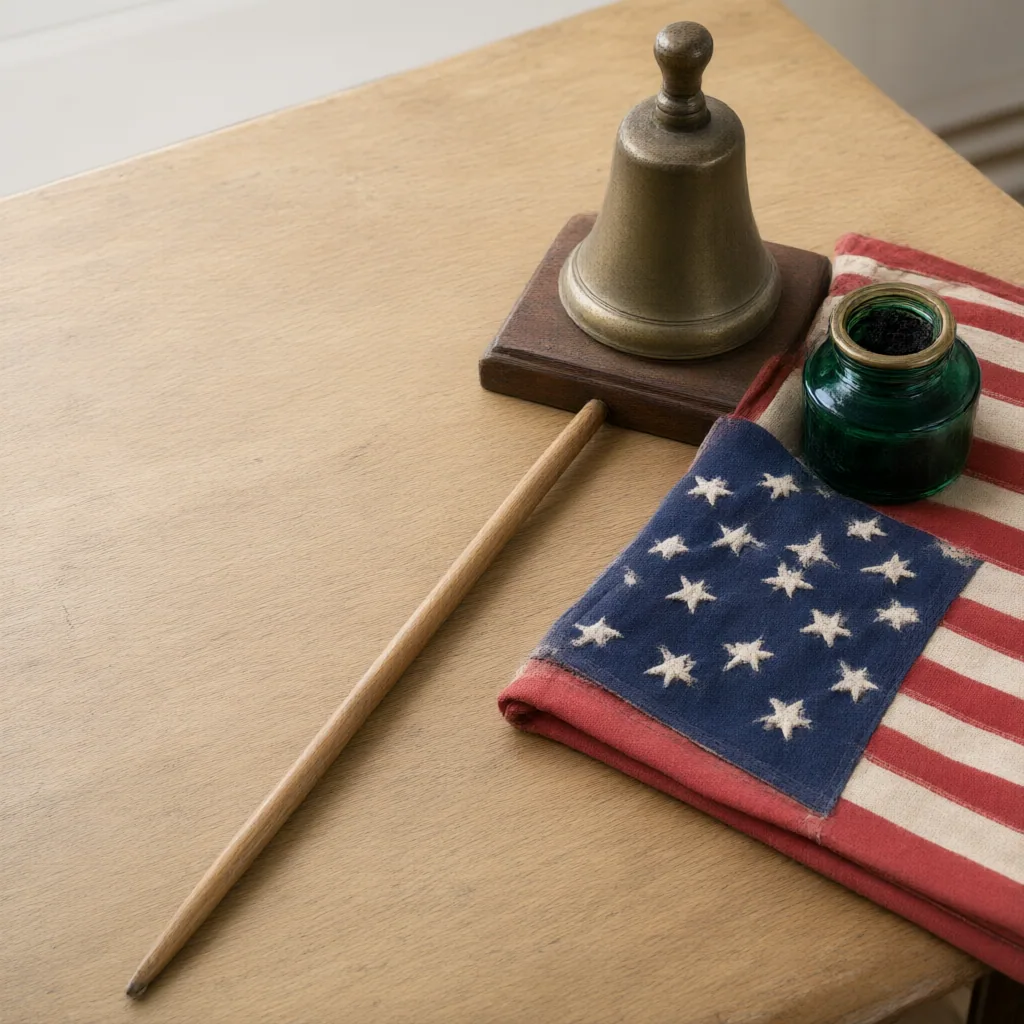
The Pledge of Allegiance sits at the intersection of language, patriotism, education, and public ritual. Readers usually come to it with practical questions: where the wording came from, why it changed, and why it still appears in debates about schools, citizenship, and freedom of conscience. This page offers a clear historical overview so you can place the pledge in its civic context rather than treat it as a fixed text outside history.
A civic ritual shaped by its era
The pledge emerged in the late nineteenth century, when public ceremonies, flag observances, and patriotic instruction were becoming more visible in American schools. It was written for use in a national setting, but its staying power came from repetition at the local level: classrooms, assemblies, community events, and public commemorations. That combination made the pledge both familiar and contested. It was not simply a statement about the flag; it became a routine way for institutions to express ideas about national belonging.
Francis Bellamy is closely associated with the pledge’s early form, and his role matters because it reminds us that civic language is authored, circulated, and revised by people with particular goals. The pledge was designed to be brief, memorable, and ceremonial. Its rhythm helped it travel easily, but its simplicity also left room for later generations to argue over what the words should mean.
Why the wording changed over time
The text most people know today was not frozen at the moment of its creation. As the pledge moved through schools and civic life, wording and usage were standardized in ways that reflected changing national priorities. Revisions were not just editorial housekeeping. Each change signaled an effort to define who was being addressed, what was being honored, and how loyalty should be publicly expressed.
That history matters because the pledge is often treated as timeless. In practice, it has always been part of an ongoing conversation about national identity. The addition of religious language in the twentieth century, for example, did not merely lengthen the sentence. It altered the tone of the pledge and widened the debate around inclusion, belief, and the boundaries of civic ceremony.
Schools, conscience, and public debate
No setting has shaped the public meaning of the pledge more than the classroom. For many Americans, first contact with the pledge came through daily recitation at school, which tied patriotism to habit, posture, and participation. That educational setting also raised lasting questions: Can a civic ritual be meaningful if it is compelled? What happens when students or families disagree with the language or the practice itself?
Debates over the pledge have therefore never been only about wording. They also concern dissent, minority rights, and the difference between respect and coercion. Court decisions and public controversies helped establish that civic unity cannot depend on forced speech. That principle is one reason the pledge remains historically important: it reveals how Americans have balanced shared symbols with constitutional protections.
Reading the pledge historically
A useful way to study the Pledge of Allegiance is to treat it as both text and practice. The text shows what civic ideals were being emphasized at a given moment. The practice shows how those ideals were taught, repeated, challenged, and reinterpreted in public life. Looking at both together gives a fuller picture than memorizing the words alone.
For students, educators, and independent researchers, the most productive next step is to compare versions of the pledge across time and read them alongside discussions of schooling, religion, citizenship, and free expression. That approach keeps the subject grounded in evidence and helps explain why a short ceremonial statement has carried such a long and complicated history.